Thinking about adding some magical sparkle to your garden or patio? Solar garden string lights are a fantastic way to do just that, and the biggest perk is they’re surprisingly easy to set up and run themselves on sunshine! No tangled wires, no climbing ladders to plug things in – just place them where they’ll catch the sun, and they light up when it gets dark.
Why Solar String Lights Are a Smart Choice for Your Outdoor Area
Let’s be honest, we all want our outdoor spaces to feel welcoming and a bit special, especially when evening rolls around. Whether you’re hosting a barbecue, enjoying a quiet read on the deck, or just want a bit of ambiance while you dine al fresco, lighting plays a huge role. And that’s where solar garden string lights Yigolighting really shine – pun intended!
They’re incredibly convenient. Once you get them, the setup is usually as simple as untangling them and ensuring the solar panel gets a good dose of sunlight during the day. That’s it. No need to worry about running extension cords, finding outdoor outlets, or increasing your electricity bill. They’re powered entirely by the sun, making them a really eco-friendly option too. You get that lovely warm glow without any extra cost or environmental impact. Plus, they’re designed to withstand the elements, so you don’t have to worry about taking them down every time it rains.
Picking the Right Solar String Lights for Your Needs
There’s a whole world of solar string lights out there, and knowing what to look for can make a big difference in how happy you are with your purchase. It’s not just about how many lights you want; it’s about the type of lights and what you want them to do.
LED vs. Incandescent: The Modern Choice Wins Out
You’ll mostly see LED bulbs in modern solar string lights, and for good reason.
Durability and Longevity
LEDs are incredibly tough. Unlike traditional incandescent bulbs, which are made of glass and have a filament that can burn out, LEDs are solid-state components. This means they’re much more resistant to vibrations and breakage, which is a big plus for outdoor lights that might get bumped or jostled. They also last for a very, very long time – often tens of thousands of hours. This translates to fewer replacements and less hassle for you over the years.
Energy Efficiency is Key for Solar
Because solar string lights rely on a battery that’s recharged by the sun, energy efficiency is paramount. LEDs consume significantly less power than incandescent bulbs. This means the solar panel can better charge the battery throughout the day, and the lights can run for longer into the night. It’s a win-win: you get more light for longer, and the system works more reliably.
Color Temperature and Brightness
LEDs come in a wide range of color temperatures, from a cool, crisp white to a warm, cozy yellow. For ambient outdoor lighting, most people opt for a warm white (around 2700K to 3000K) as it creates a welcoming and relaxing atmosphere. The brightness, measured in lumens, will also vary. For general decorative lighting, you probably don’t need super bright lights, but if you’re looking to illuminate a path or a specific area, you’ll want to check the lumen output.
Bulb Shape and Style: More Than Just a Pretty Glow
The shape and style of the bulbs themselves can really impact the overall aesthetic of your outdoor space. Gone are the days when string lights were just little tiny bulbs.
Classic Edison Bulbs for Vintage Charm
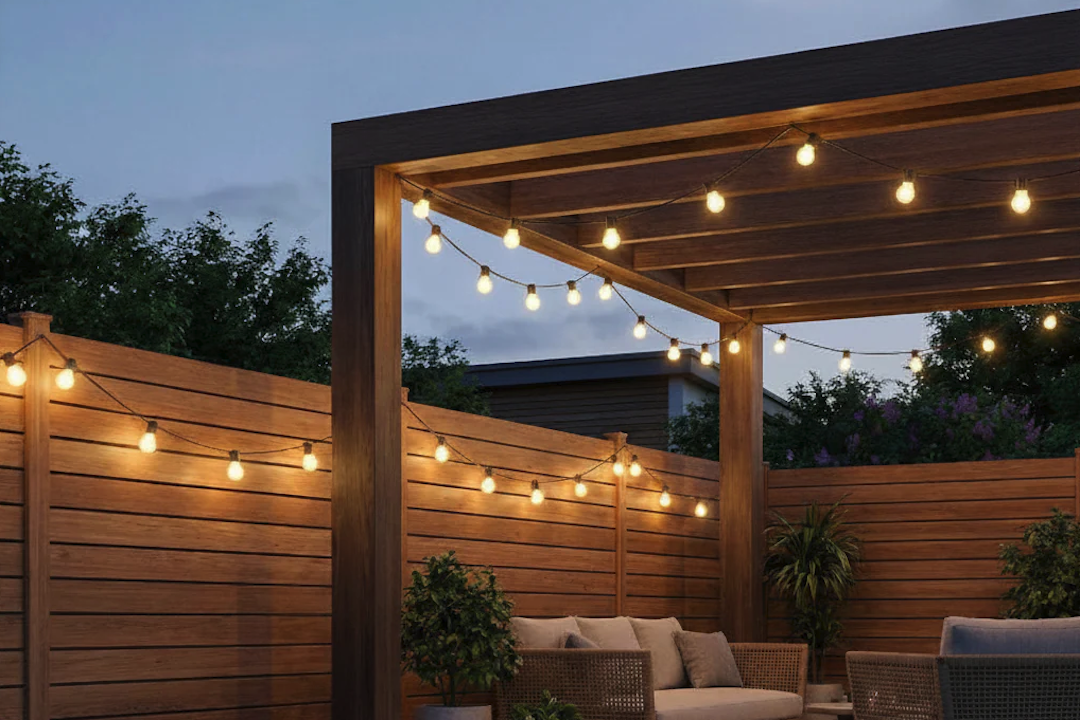
If you’re going for a vintage or rustic look, Edison-style bulbs are a popular choice. These often have a more industrial or antique appearance, with visible filaments (though they’re usually LED replicas). They cast a beautiful, warm glow and add a touch of character to patios, pergolas, or garden fences. They tend to be a bit larger than standard mini-lights, making them a focal point.
Globe or Orb Lights for a Modern and Fun Feel
For a more contemporary or whimsical vibe, globe or orb lights are fantastic. These come in various sizes, from small decorative orbs to larger statement pieces. They can add a playful touch to a garden party or create a magical, fairy-tale atmosphere. They’re often made of frosted or colored glass (or durable plastic), adding a softer, diffused light.
Icicle or Curtain Lights for Dramatic Effect
If you want to create a more dramatic or festive look, consider icicle or curtain lights. Icicle lights mimic the look of icicles hanging from eaves, perfect for a winter theme or just adding a cascading effect. Curtain lights are essentially a series of vertical strings that hang down, creating a shimmering wall of light. These are great for backdrops, framing doorways, or adding a touch of glamour to an event.
Length and Number of Lights: Measure Twice, Buy Once
This might seem obvious, but accurately assessing how much lighting you need can save you a lot of disappointment.
Where Will You Hang Them?
Before you even browse, walk around your yard and identify exactly where you plan to hang the lights. Are you draping them along a fence line? Wrapping them around tree trunks? Hanging them from a pergola or awning? Each of these scenarios will require a different length of string. Measure the distances carefully. It’s better to have a little extra length than not enough.
Consider the Spacing of the Lights
The spacing between each bulb on the string is also important. Some lights are spaced only a few inches apart, creating a denser glow, while others might be a foot or more apart. Closer spacing generally means you need a shorter overall length to achieve a certain look, but it also means you’ll have more individual lights. Think about the density of light you want.
Understanding Solar Panel Performance and Battery Life
The magic of solar string lights lies in their renewable energy source. But for them to work reliably, the solar panel and battery need to be doing their job effectively.
The Solar Panel: Your Sunlight Catcher
The solar panel is the heart of your solar string lights. It’s what converts sunlight into electricity to charge the battery that powers the lights.
Placement is Crucial for Optimal Charging
This is arguably the most important factor for consistent performance. Your solar panel needs direct sunlight for several hours each day. Avoid placing it where it will be shaded by trees, buildings, or even dense foliage. Even partial shade can significantly reduce its ability to charge the battery. Ideally, the panel should face south (in the Northern Hemisphere) to maximize exposure throughout the day. Don’t forget that deciduous trees will lose their leaves in winter, potentially opening up more sunlight.
Panel Size and Wattage: More Power for More Light
Generally, a larger solar panel or one with a higher wattage will be able to capture more energy and charge the battery more effectively. This is particularly important if you have a long string of lights or bulbs that require more power. If the lights struggle to stay on for long, the solar panel might be too small for the demands.
Maintenance for the Panel
Keep the solar panel clean! Dust, dirt, pollen, and bird droppings can accumulate and block sunlight. A quick wipe with a damp cloth every now and then will ensure it’s working at its best. It’s a simple step that makes a noticeable difference.
The Battery: The Powerhouse of Your Lights
The battery is what stores the energy collected by the solar panel, allowing your lights to shine when it’s dark.
Battery Type and Capacity: What Matters for Runtime
Most solar string lights use rechargeable lithium-ion or nickel-metal hydride (NiMH) batteries. The capacity of the battery (measured in milliampere-hours or mAh) dictates how much energy it can store. A higher capacity battery generally means longer runtimes. If you find your lights are only on for a couple of hours, a battery with a larger capacity might be needed.
Battery Replacement: A Common (and Fixable) Issue
Like any rechargeable battery, the ones in solar lights won’t last forever. Over time, they lose their ability to hold a charge. If your lights stop working or their runtime decreases significantly, the battery is often the culprit. Many models allow for easy battery replacement, so you can often revive your lights with a new battery instead of buying a whole new set. Check the manufacturer’s instructions for how to do this.
Weather’s Impact on Battery Performance
Extreme temperatures, both hot and cold, can affect battery performance. Very cold weather can reduce a battery’s capacity, and prolonged exposure to extreme heat can degrade it over time. While most solar lights are designed for outdoor use, think about where the battery pack is located. If it’s exposed to direct, intense sun all day, it might get quite hot.
Installation and Placement Tips for Maximum Impact
Getting your solar string lights set up correctly is key to both their functionality and their visual appeal.
Harnessing the Sun: Strategic Panel Placement
We’ve touched on this, but it bears repeating. The solar panel’s position is critical.
No Shade, No Problem
Aim for at least 6-8 hours of direct sunlight for the panel each day. This might mean placing it in an open area of your garden, on a fence post, or even on a rooftop if suitable and safe. Think about the sun’s path throughout the day and the year. What might be sunny in summer could be shaded by a deciduous tree in winter.
Consider the Wire Length from Panel to Lights
Some solar string lights have the solar panel integrated into the string itself, while others have a separate panel with a wire to connect to the lights. If you have a separate panel, you have more flexibility. You can place the panel in the sunniest spot and then run the wire to where you want the lights to illuminate. This is a great workaround if your desired light location isn’t directly sunny.
Hanging Your Lights: Creating the Perfect Ambiance
Once the solar aspect is handled, it’s time to think about how the lights will look and where they’ll cast their glow.
Draping and Weaving: Classic Techniques
The most common way to hang string lights is to simply drape them. This works wonderfully along fences, railings, or over pathways. You can also weave them through trees, around bushes, or along pergolas. Use ties, clips, or hooks to secure them. Avoid pulling the strings too taut, as this can strain the wires and the bulbs; a little sag is okay and often looks more natural.
Creating Focal Points and Defining Spaces
Don’t just hang them randomly. Think about what you want to highlight. Perhaps a beautiful specimen tree, a seating area, or an entryway. String lights are excellent for defining outdoor “rooms” – for example, creating a cozy dining nook on your patio. You can also use them to draw attention to architectural features or even a garden bed.
Safety First: Securing Your Lights
Make sure your lights are securely fastened. You don’t want them to fall and potentially break or become a tripping hazard. For heavier lights like Edison bulbs, ensure you’re using strong supports and consider weight distribution. If you’re hanging them high up, ensure you have a stable ladder and perhaps a helper.
Enhancing Your Solar String Lights with Accessories and Maintenance
While solar string lights are designed to be low-maintenance, a few additions and a little care can elevate their performance and longevity.
Extending Functionality: Smart Features and Power Banks
For those who love a bit more control, there are options beyond basic on/off.
Remote Controls and Timers
Some higher-end solar string lights come with remote controls, allowing you to turn them on or off, adjust brightness, or even change lighting modes without having to physically reach the solar panel. Others have built-in timers, so you can set them to come on at dusk and turn off after a set number of hours. This is incredibly convenient.
Solar Power Banks for Backup
If you live in an area with consistently less sunshine, or if you have a very long string of lights that drains the battery quickly, consider using a separate, larger solar power bank. This can supplement the charging of your existing battery or even be used to power your lights if the integrated solar panel isn’t sufficient. Some people even use a small, dedicated solar panel and rechargeable battery pack plugged into the string lights for enhanced power.
Seasonal Care and Troubleshooting Common Issues
Your solar string lights will likely be exposed to the elements year-round, so a bit of seasonal attention is a good idea.
Winterizing Your Lights
In colder climates, you might consider bringing your solar string lights indoors for the winter, especially if they contain delicate components or if you want to protect the battery from extreme cold. However, many are designed to withstand winter conditions. If you leave them out, ensure the solar panel is clear of snow and ice. Battery performance will likely be reduced in very cold temperatures.
Dealing with Dimming Lights or Short Runtimes
If your lights are dimming or not lasting as long as they used to, here’s a quick troubleshooting guide:
- Clean the panel: As mentioned, dirt is a huge culprit.
- Check for shade: Has a tree grown, or has something else started blocking sunlight?
- Replace the battery: If the lights are several years old, the battery has likely degraded. This is often the simplest fix.
- Assess the number of lights: Are you trying to power too many bulbs for the panel and battery capacity?
Storing Lights Properly
If you do decide to store your lights, untangle them carefully and store them in a dry place. Avoid coiling them too tightly, as this can damage the wires.
Creative Ways to Use Solar String Lights in Your Garden Design
Beyond just illuminating a pathway, solar string lights can be a versatile design element in your outdoor space.
Enhancing Natural Features: Trees, Bushes, and More
Let nature be your canvas.
Twinkling Tree Trunks and Branches
Imagine a mature tree in your garden, its trunk and branches artfully wrapped in warm string lights. This creates a magical focal point, especially at night. You can use shorter strings to wrap around trunks or longer ones to delicately weave through branches. This works beautifully with globe lights or even the classic mini-lights.
Highlighting Shrubs and Flower Beds
Use smaller, more flexible strings of lights to weave through the foliage of shrubs or to define the edges of flower beds. This provides a soft, ethereal glow that subtly enhances the natural beauty of your plants without being overwhelming. Consider lights with different colors for a more whimsical effect around flowers.
Creating Ambiance for Entertaining and Relaxation
Your garden can become an extension of your living space.
Illuminating Patios and Decks for Evening Gatherings
Draping string lights over a patio or deck instantly transforms it into an inviting space for entertaining or a relaxing evening retreat. They provide just enough light for ambiance without being too harsh. Combine them with other forms of outdoor lighting, like lanterns, for layered illumination.
Lighting Up Pergolas and Gazebos for Cozy Nooks
Pergolas and gazebos are perfect structures for string lights. Hanging them from the roof beams or along the sides creates intimate, enclosed spaces perfect for dining, reading, or simply enjoying the night air.
Defining Pathways and Architectural Elements
Guide your guests and highlight your home.
Safe and Sightly Garden Paths
Using solar string lights to line garden pathways not only makes them safer to navigate after dark but also adds a charming, welcoming feel. You can lay them directly on the ground (if the lights are durable enough) or secure them with stakes along the edges.
Accentuating Fences, Walls, and Other Structures
Drape lights along the top of a fence line, weave them around trellises, or use them to highlight the architectural details of your home or garden shed. This draws the eye and adds visual interest to areas that might otherwise be overlooked in the dark.
Solar garden string lights offer a simple, sustainable, and beautiful way to bring your outdoor spaces to life after the sun goes down. With a little planning and attention to detail, you can create a truly enchanting atmosphere that you and your guests will enjoy all season long.