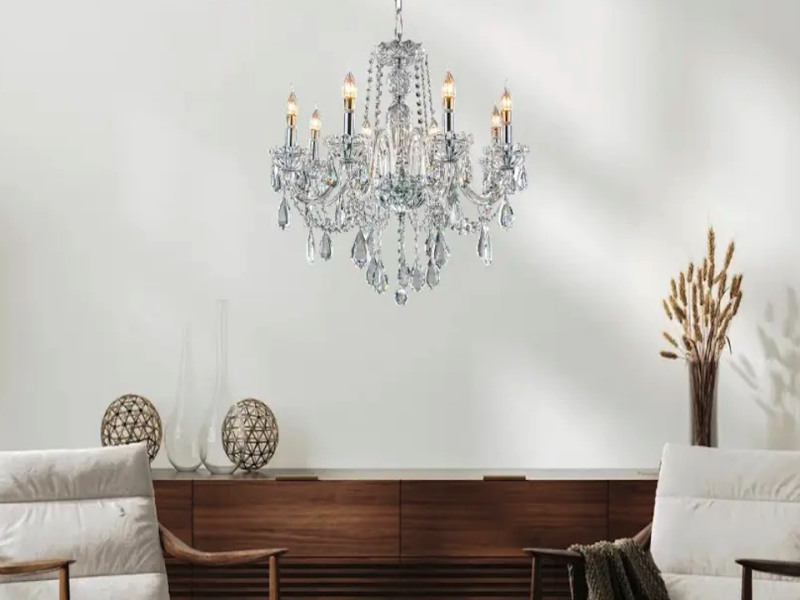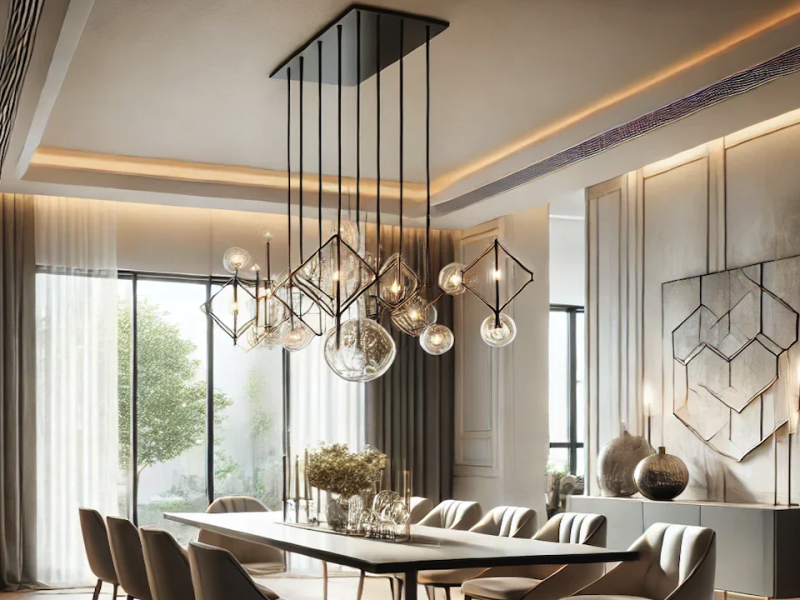
So, you’re wondering about kitchen lighting, specifically the age-old dilemma: linear chandelier or clustered pendants? The quick answer is, it depends entirely on your kitchen’s size, style, and how you actually use the space. Both can be fantastic, but they excel in different scenarios. Let’s dig into the details to help you make the best choice for your home.
Before we dive into the nitty-gritty of choosing, let’s make sure we’re on the same page about what these lighting Dreamlahomes fixtures actually are.
The Linear Chandelier Defined
Think of a linear chandelier as a single, elongated fixture. It usually has multiple light sources (bulbs) arranged in a line along a bar or a single frame. They’re designed to spread light evenly over a rectangular surface, like a kitchen island or a long dining table.
Clustered Pendants Explained
Clustered pendants, on the other hand, are individual pendant lights grouped together. They can hang at the same height or at varying heights, creating a more dynamic, sculptural look. You might see two, three, or even more pendants hanging from a single canopy, or sometimes even individual pendants strategically placed close together.
Key Considerations for Your Kitchen
Making the right choice isn’t just about aesthetics; it’s about functionality and how the light will actually work in your space.
Kitchen Island Size and Shape
This is often the most critical factor. The dimensions of your island will heavily influence which option looks and functions best.
Long and Narrow Islands
If your island is quite long (say, over 6 feet) and relatively narrow, a linear chandelier is often a very natural fit. It mirrors the shape of the island, providing consistent light across its entire length without feeling visually busy. It creates a cohesive, streamlined look.
Square or Wider Islands
For more square-shaped or very wide islands, clustered pendants can sometimes offer more flexibility. You can arrange them to cover the wider area more effectively, or even use a single, larger pendant if the island isn’t exceptionally big. A linear chandelier on a very wide island might look a bit lost or disproportionate.
Islands with Unique Shapes
If your island has an L-shape, a curved design, or some other non-standard form, clustered pendants might give you more creative freedom. You can space them out to follow the contours of the island, whereas a linear chandelier would be fixed in its straight line.
Kitchen Style and Aesthetic
Your overall kitchen design plays a huge role. You want your lighting to complement, not clash with, your existing decor.
Modern and Contemporary Kitchens
Linear chandeliers, particularly those with minimalist designs, sleek finishes (like brushed nickel or matte black), and integrated LED lighting, often fit seamlessly into modern and contemporary kitchens. Their clean lines and uncluttered appearance align well with these styles. Clustered pendants can also work, especially if they have a minimalist design and consistent spacing.
Traditional and Transitional Kitchens
For more traditional or transitional kitchens, both options can work. A linear chandelier with more ornate details, perhaps a dark bronze finish, or glass shades, could be lovely. Clustered pendants in these styles might feature classic shapes, seeded glass, or perhaps even fabric shades, offering a softer, more inviting feel. The key is matching the materials and finishes.
Industrial and Farmhouse Kitchens
Industrial spaces often favor linear chandeliers with exposed bulbs, metal cages, or robust, utilitarian designs. For farmhouse, linear chandeliers made from wood, distressed metal, or with barn-light aesthetics are popular. Clustered pendants in these styles might feature mason jars, clear glass, or metal domes. It really comes down to the specific materials and finishes that evoke the desired look.
Functionality and Lighting Needs
Beyond looking good, your lighting needs to perform. What kind of tasks do you do at your island?
Task Lighting for Prep Work
If your island is primarily a workspace for chopping, mixing, and other food prep, strong, even task lighting is essential. A linear chandelier is generally excellent for this as it distributes light uniformly across the length of the island. Ensure it has enough lumens and is on a dimmer switch so you can adjust the brightness.
Clustered pendants can also provide good task lighting, but you might need more of them, or ensure they have a wider light spread, to avoid shadows between them. The height at which they hang is also crucial here – too high, and the light disperses too much; too low, and they can create glare or become an obstruction.
Ambient Lighting for Socializing
When the kitchen island doubles as a breakfast bar or a gathering spot, you’ll want more ambient, softer lighting. Both linear chandeliers and clustered pendants can achieve this, especially when paired with dimmers. The type of bulb (warmer color temperature) and shade material will also influence the mood. Opaque or frosted shades will diffuse light more softly than clear glass.
Decorative Accent Lighting
Sometimes, the lighting above the island is purely decorative – a statement piece. Clustered pendants often shine here, offering more sculptural potential and an opportunity to create a visual focal point. Different heights and varying pendant designs within the cluster can add significant visual interest. A linear chandelier can also be decorative, but its impact is usually more about its inherent design rather than the arrangement of individual elements.
Advantages and Disadvantages of Each Option
Let’s break down the pros and cons to help you weigh your options.
Linear Chandelier Pros
Uniform Light Distribution
As mentioned, this is their superpower. They provide excellent, consistent illumination across a long surface, reducing shadows.
Streamlined Aesthetic
They offer a clean, uncluttered look that’s perfect for modern or minimalist designs, as they are a single, cohesive unit.
Sense of Grandeur
Many linear chandeliers are substantial in size, making a significant visual statement without feeling overly busy.
Simpler Installation
Often, a linear chandelier requires just one electrical box and one fixture to install, which can sometimes be simpler than wiring multiple individual pendants.
Linear Chandelier Cons
Less Flexible for Odd Shapes
If your island isn’t a perfect rectangle, a linear chandelier might not be the most adaptable choice.
Can Be Visually Heavy
Depending on the design, a very large linear chandelier can sometimes feel a bit imposing or heavy in a smaller kitchen or over a narrower island.
Limited Customization Post-Installation
Once it’s up, the arrangement of lights within a linear chandelier is fixed. You can’t easily change their spacing or height individually.
Clustered Pendants Pros
Highly Customizable and Flexible
You can choose the number of pendants, their individual designs, their heights, and their spacing. This allows for a truly personalized look.
More Dynamic Visual Interest
The varied heights and individual nature of pendants can create a more artistic, sculptural, and eye-catching focal point.
Adaptable to Various Island Shapes
You can strategically place pendants to follow the contours of non-rectangular islands, or effectively light a wider or squarer surface.
Can Mix and Match Styles
If you’re feeling adventurous, you can even mix different pendant designs within a cluster for an eclectic look (though this requires a careful eye).
Clustered Pendants Cons
Can Look Visually Busy
Too many pendants, or pendants that are too large, can make the space feel cluttered or overwhelming, especially in a smaller kitchen.
Potential for Uneven Lighting
If not carefully planned, individual pendants can create “hot spots” of light directly underneath them, with darker areas in between, leading to shadows.
More Complex Installation
Installing multiple individual pendants can sometimes be more involved, potentially requiring more electrical boxes or careful spacing calculations.
Requires More Decision-Making
The sheer number of choices (how many? what height? what spacing?) can sometimes be overwhelming.
Making Your Final Decision: Practical Steps
So, how do you pull all this information together and actually decide?
Measure Your Space Carefully
This is non-negotiable.
Island Length and Width
Knowing these dimensions is critical for sizing your fixture. A good rule of thumb for a linear chandelier is that it should be about two-thirds to three-quarters the length of your island. For pendants, consider spacing them 20-30 inches apart, depending on their size, leaving enough space from the ends of the island.
Ceiling Height
This impacts the hanging height. You want at least 30-36 inches clearance between the bottom of your fixture and the surface of the island to avoid head bumps and ensure light spreads well. Higher ceilings can accommodate larger or longer fixtures.
Overall Kitchen Dimensions
Consider the room as a whole. A very large kitchen can handle a more substantial fixture, while a smaller kitchen will benefit from something more visually lightweight.
Consider the Flow and Sightlines
Walk through your kitchen. Where do your eyes naturally go? Do you want the lighting to be a focal point, or more of a background element?
Avoiding Obstructions
Ensure the chosen fixture won’t block views or feel like it’s “in the way” when you’re standing at the island or walking past it.
Visual Weight
Does the fixture feel balanced in the space? A heavy fixture in a small kitchen can feel oppressive.
Think About Your Lifestyle
How do you actually use your kitchen?
Avid Cook?
Prioritize task lighting and adjustability (dimmers are a must!).
Entertainer?
Consider fixtures that offer good ambient light and can set a mood.
Family Hub?
Durability and ease of cleaning might be important.
Test It Out (Virtually or Physically)
Cardboard Cutouts
If you’re really stuck, cut out a piece of cardboard to the rough dimensions of a linear chandelier you’re considering, or tape string with circles for pendants, and hold them up. It gives you a surprisingly good sense of scale.
Online Visualizers
Many lighting retailers have tools that let you see fixtures in a generic room. While not perfect, it can help.
Ask for Opinions
Show photos of your kitchen to friends or family and get their thoughts. Sometimes a fresh pair of eyes can spot something you’ve missed.
Don’t Forget the Details
Bulb Type and Temperature
LEDs are energy-efficient and come in various color temperatures (warm white for cozy, cool white for task).
Dimmers
Absolutely essential for flexibility and mood control.
Finish Matching
Try to coordinate the finish of your light fixture with other metals in your kitchen (faucet, cabinet hardware) for a cohesive look.
Ultimately, both linear chandeliers and clustered pendants are excellent choices for kitchen island lighting. The “right” one isn’t universally better; it’s the one that best suits your specific kitchen, your personal style, and how you use the space. Take your time, consider these points, and you’ll end up with lighting that not only looks great but genuinely enhances your kitchen experience.